

When industries pollute our land, contaminate our water, and harm our health, they need to be held accountable. 

That’s what the Pollution Cleanup Package is about — making much-needed improvements to Michigan’s weak pollution cleanup laws that have, for too long, shielded polluters from taking responsibility for the harm they’ve caused to residents and communities around the state.  

Crafted through extensive consultation with industry stakeholders, environmental advocates, and representatives from local and state government, this legislation would protect Michigan’s public health and environment by:  

  • Requiring more thorough cleanups of contaminated sites, 

  • Making information about polluted sites more available, and 

  • Empowering those harmed by pollution to seek justice. 

In Michigan right now, there are 27,000 contaminated sites caused by polluters and that’s just the ones we’re aware of. Over half of those are orphaned, left behind for taxpayers and communities to foot the bill and face the potential threats to their health, including cancer, birth defects, miscarriages, and kidney failure.  
    When industries pollute our land, contaminate our water, and harm our health, they need to be held accountable.

      We must bring greater transparency to the state of the land and water that surrounds us because residents have a right to know about pollution in their backyard. 

      “These bills put liability where it belongs: with the polluters, not the public.”

      – Sen. Irwin  

      Find out where Michigan’s contaminated sites are located by checking out this interactive map. 

      Committee Testimony

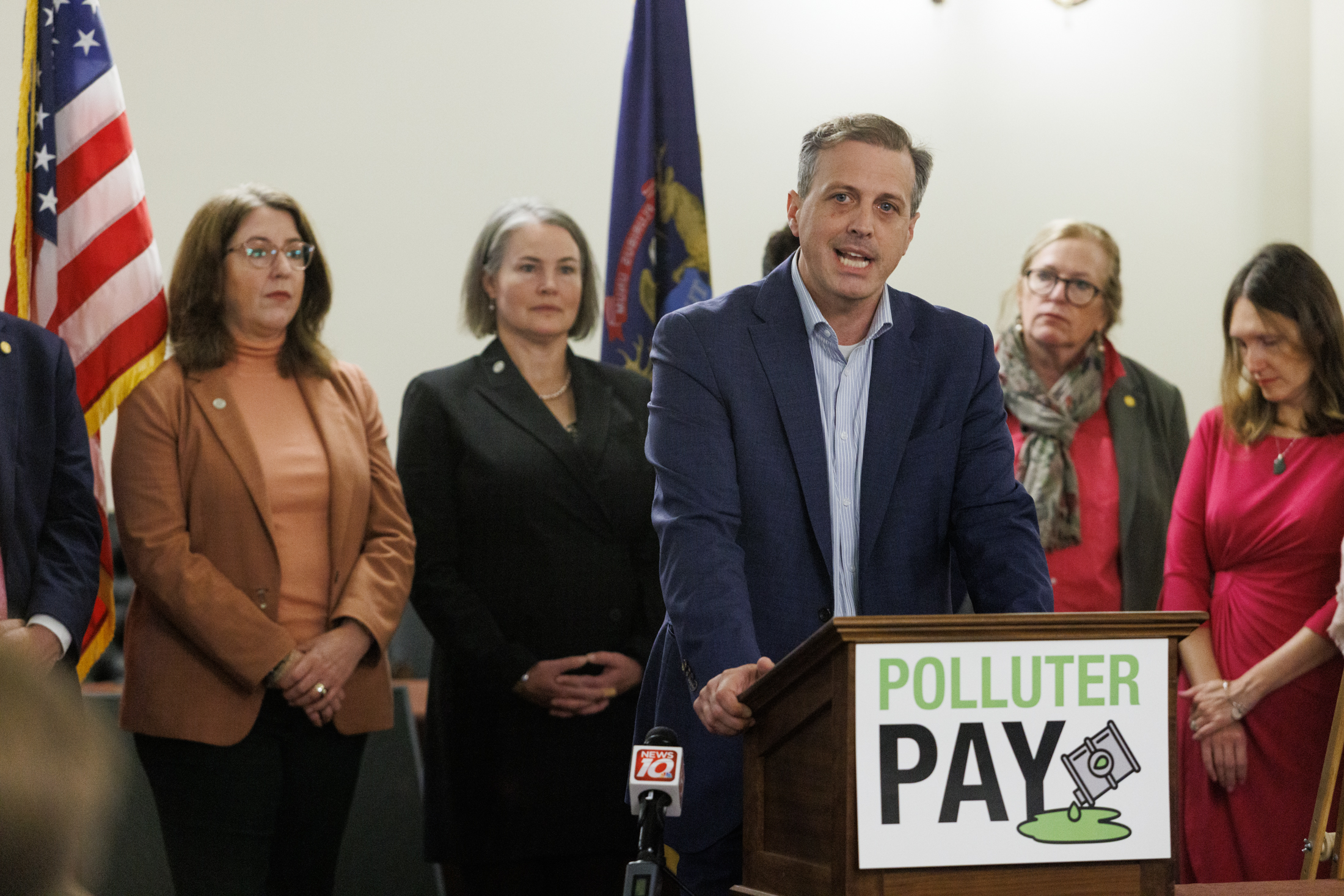
      Watch testimony I shared alongside my Democratic colleagues and cosponsors in the Senate Committee on Energy and Environment, where this legislation currently awaits a vote. 

        “If you pollute our water, poison our soil, or threaten public health — you pay to clean it up.” 

        Rep. Morgan, co-sponsor of the House companion legislation  

        What the Legislation Does:

        Increases accessibility of information about polluted sites and requires more contaminated materials to be removed or treated rather than left in place

        Senate Bill 391 (Sen. Irwin) 

        Provides a usable process for updating cleanup criteria to protect public health as researchers learn more about risks and prioritizes removing contamination over using land/water use restrictions

        Senate Bill 392 (Sen. Moss) 

        Makes necessary changes to rulemaking so experts can update inputs for cleanup criteria and target detection limits

        Senate Bill 385 (Sen. Chang)

        Enables people exposed to a hazardous substance to recover costs from the polluter to cover medical monitoring before a serious health condition has been diagnosed

        Senate Bill 386 (Sen. Shink)

        Extends the statute of limitations for hazardous substance claims so Michiganders who have only recently found out that they were harmed can sue polluters, aligning with the federal statute of limitations’ “discovery rule.”

        Senate Bill 387 (Sen. McMorrow)

        Extends the statute of limitations under NREPA so the state of Michigan can hold polluters accountable for cleanup costs and damages to our environment from contaminants not regulated before 1994, including PFAS

        Senate Bill 393 (Sen. McCann)

        Learn more about the Pollution Cleanup Package here. 

          “Michigan laws should protect residents, and the default response to a spill should be to clean it up, not fencing it off and letting it sit. We know that contamination cleanup can be difficult, but the current law doesn’t even require polluters to try. The Polluter Pay legislation prioritizes removing contamination rather than simply issuing land and water use restrictions.” 

          – Senator Moss

          “By the time we understood PFAS risks, the legal window to hold polluters accountable had already slammed shut. For decades, manufacturers knew that even low levels of these ‘forever chemicals’ were dangerous and covered it up. We can’t let companies get away with poisoning Michigan just because they hid the evidence long enough.” 

          – Senator McMorrow

          “When you’re notified a polluter has exposed you to a hazardous substance, of course, you want to find out if your health has been affected. People already have the right to sue polluters who make them sick, but it often takes a while for the ill effects of a toxic exposure to manifest in a medical diagnosis. My bill would make polluters liable for the costs of medical monitoring to detect problems in the people they put at risk.” 

          – Senator Shink

          “You don’t always know immediately that you have been harmed by pollution. By starting the clock on polluters’ liability before the problem is detected, Michigan’s statute of limitations incentivizes coverups and penalizes people for not knowing they were being poisoned. My bill would, like federal law, start the clock on liability when a person finds out about the pollution so that they have a meaningful chance to seek justice.” 

          – Senator McCann

          “My village of Pellston has beautiful artesian spring water that we cannot drink. I am a water protector, and my own mother was a tribal elder who died of pancreatic cancer from PFAS exposure. Now I’m just waiting for another family member who will get sick and die from PFAS. As legislators, it’s your job to make laws that protect us and our communities.” 

          Andrea Pierce, on behalf of the Michigan Environmental Justice Coalition and the Anishinaabek Caucus.

          “The costs of pollution should fall on polluters, not on taxpayers, ethical businesses, or future generations. I hear some businesses complaining that this legislation would increase their costs. But responsible companies adapt under pressure, and it’s not fair to allow companies to artificially inflate their profit margins by evading accountability. This legislation doesn’t target business; it targets pollution.” 

          Jimmy Banish, Chief Operations Officer of the Bear Factory

          “My family and community have been directly impacted by the PFAS contamination from Wurtsmith Air Force Base. We have been shocked to learn that we have no recourse in the courts against those who caused the harm because of Michigan’s barbaric statute of limitations system. People, businesses, and local governments all lose their rights to seek justice before they even know they have been harmed. We need to change the law so that the legal clock starts when people discover the damage, not when the pollution secretly occurs.” 

          Tony Spaniola, Co-Chair of the Great Lakes PFAS Action Network